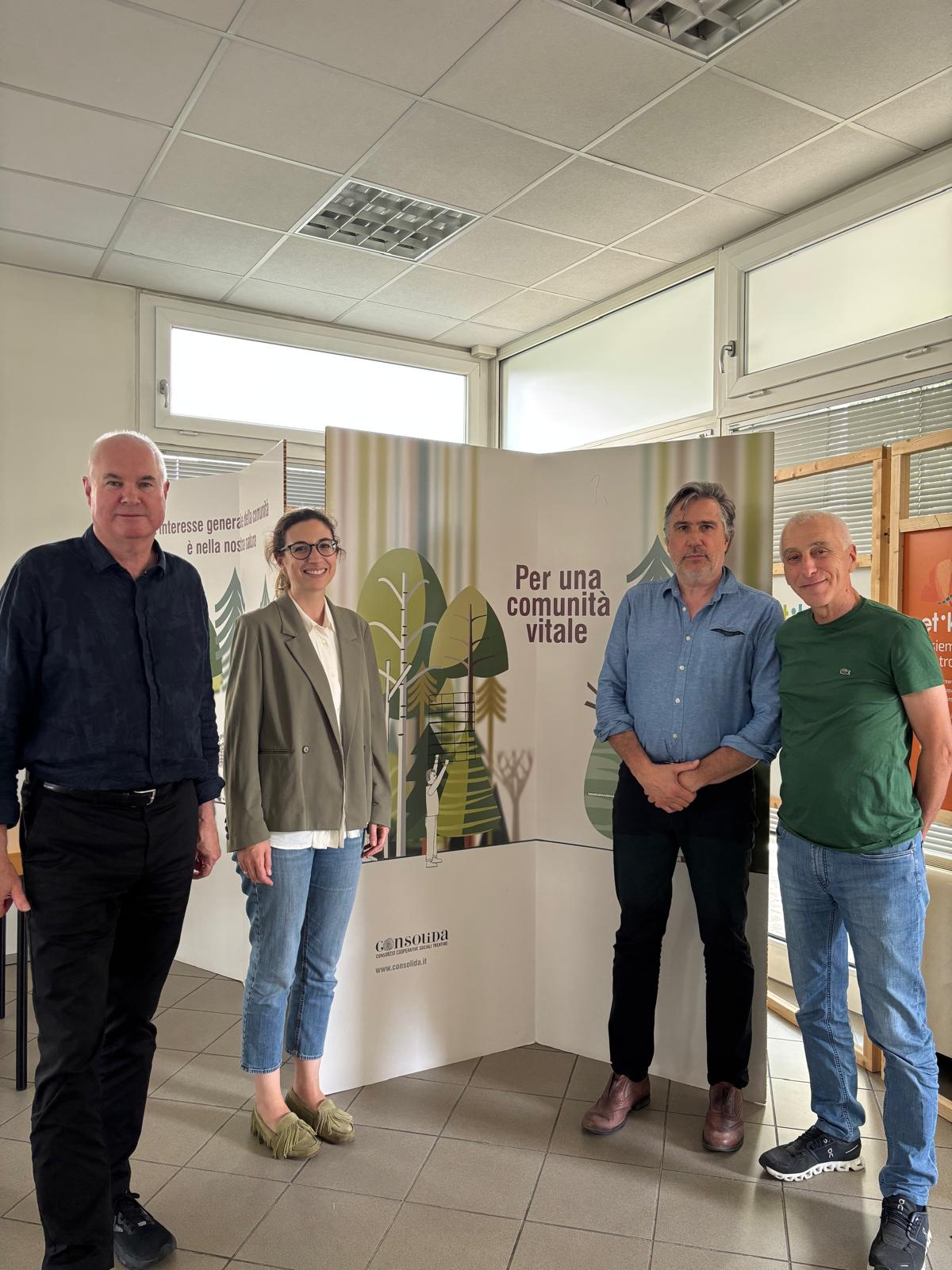
The SONYA project has reached an important milestone. During our recent visit to the rural Trento region in Italy, we collected valuable first-hand insights from 20 local stakeholders engaged—formally and informally—in the social care ecosystem.
We would like to warmly thank Silvia Scramuzza, Director of the social consortium CONSOLIDA, for facilitating meaningful engagement with local actors, and extend our appreciation to Rod McColl (Client Service Management) and Marco Michelotti (Employment Relations), both from Rennes School of Business, for their collaboration in conducting the interviews.
Who Participated?
Our team engaged with a diverse range of stakeholders, including:
- Volunteers and community leaders from the social economy
- Managers of care services run by social economy actors
- Informal carers (e.g. family members)
- Formal care workers
- Older adults facing varied social care needs
- Public officers from local municipalities
These dialogues revealed both the challenges and enablers of social inclusion for older adults and carers in rural settings.
What Are We Learning?
A recurring theme was the importance of voluntary and community-driven actions that often remain unrecognised by formal care systems, despite providing essential support.
Examples include:
- A hairdresser offering home services to elderly residents with mobility limitations, creating intergenerational touchpoints
- A local café informally supporting a neighbour with meal preparation and companionship
Such spontaneous initiatives frequently fill critical gaps in rural social care, yet often operate without formal support, facing legal, financial, and logistical hurdles.
What’s Next?
We are now working to systematically map these informal actors and practices in rural care provision. Our inquiry is guided by pressing questions:
- What happens when informal care networks collapse—such as when a carer becomes ill?
- What skills, networks, and resources exist—or are lacking—among rural care actors?
- How do care needs evolve with changes in health, housing, or climate—and who is able to respond?
- What sustains small-scale voluntary action, and what threatens its continuity?
For many older adults, community interaction is care—and social inclusion remains a fundamental gateway to well-being.