Research on long-term care is, by its very nature, a sensitive field in which vulnerability, health, emotions, and structural inequalities intersect. When this type of research is conducted in rural contexts, such as the Alto Turia territory, complexity increases: social networks are dense, anonymity is limited, and available services are often scarce. In this setting, the work carried out by the Fundación El Olmo(FO) within the Living Lab of the SONYA project required a solid ethical and methodological approach from the outset. The organization assumed that research quality depended not only on well-designed protocols, but also on a daily practice grounded in transparency, sensitivity, and responsibility toward the participating community.
Before beginning fieldwork, the Fundación El Olmoestablished an ethical and methodological framework aligned with the guidelines set out in the project. This framework included procedures for informed consent, data management, confidentiality, boundaries in interactions with participants, and mechanisms to ensure emotional well-being during interviews. Rather than conceiving ethics as an initial procedural requirement, the Fundación El Olmoapproached it as an ongoing process of reflection, review, and adaptation. This dynamic perspective made it possible to respond to emerging dilemmas and to maintain a consistent standard of quality throughout the research process.
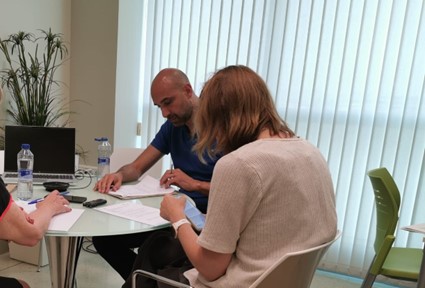
A key component of this approach was the training of the interviewing team. The Fundación El Olmoparticipated in training sessions within the SONYA project that went beyond conventional technical skills. These sessions included semi-structured interviews designed to represent different participant profiles—ranging from highly expressive individuals to more reserved participants, as well as emotionally affected caregivers or professionals with a high level of technical expertise. This diversity enabled the team to develop specific relational competencies tailored to each situation. In addition, the initial field sessions were conducted using a “shadowing” approach, whereby less experienced interviewers accompanied senior members of Rennes School of Business, the project coordinator. This process facilitated direct observation of how rapport is built, how pauses or intense emotions are managed, and how conversations are concluded in a professional manner. Finally, the training incorporated ethical case discussions, a strategy that helped anticipate sensitive situations and strengthen decision-making in the field.
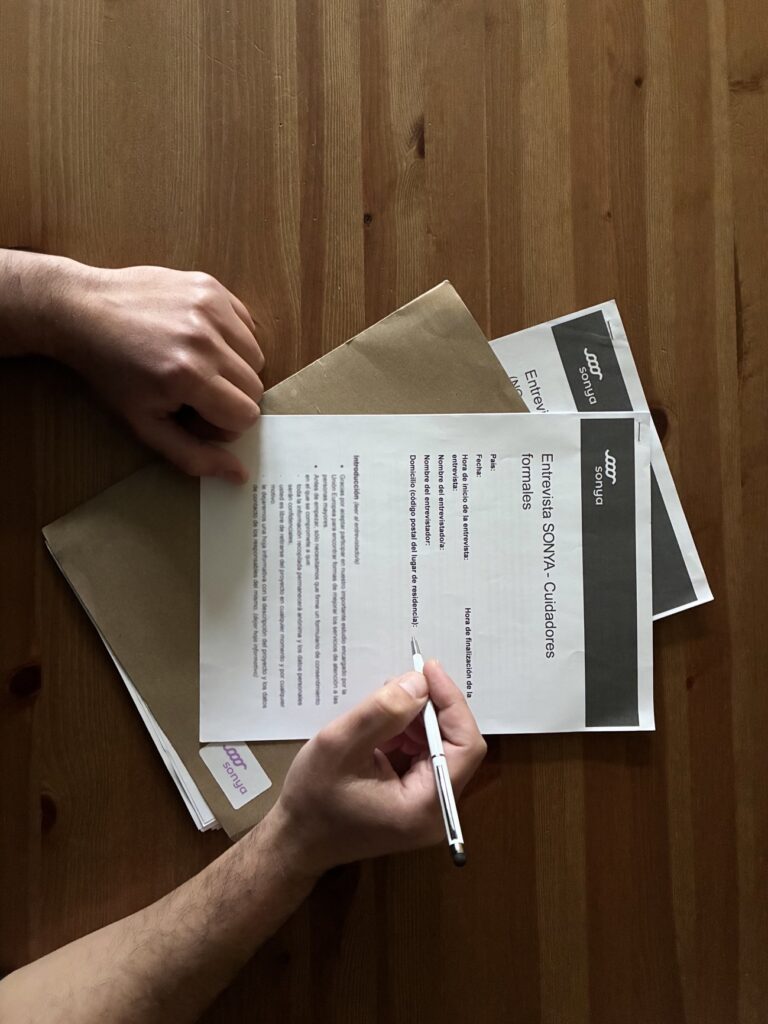
Ensuring informed participation was another central axis of the Fundaión El Olmo’s work. In Alto Turia, where administrative procedures may be perceived as distant or overly formal, the organization adapted the project’s forms and protocols to make them clear and accessible. Explanations were provided in plain language, with sufficient time to address questions, consistently emphasizing the voluntary nature of participation and the possibility of withdrawing at any time. This process was accompanied by a key message: SONYA’s research did not aim to evaluate services or identify institutional shortcomings, but rather to understand realities in order to improve care models.
One of the greatest methodological challenges in rural contexts is confidentiality. Even in the absence of names, details about participants’ lives can allow for identification due to the small size of communities. To mitigate this risk, the Fundación El Olmoimplemented specific anonymization measures in line with European guidelines, such as generalizing descriptions, selectively using direct quotations, and removing overly specific references. Data storage and processing followed the requirements of the General Data Protection Regulation (GDPR), using encrypted systems and restricted access. This combination of technical rigor and contextual judgment was essential to protecting participants’ privacy.
The emotional dimension of the work also required particular attention. Conversations about care, dependency, or family overload can evoke painful memories or generate distress. For this reason, the Fundación El Olmoestablished a set of practices aimed at preserving emotional safety: allowing pauses, stopping interviews when necessary, avoiding pressure to obtain additional information, and, where appropriate, suggesting local support resources. These practices reflect a deep understanding that research on care must always prioritize the well-being of participants.
Methodological quality was further reinforced through internal control mechanisms. After each fieldwork day, the team conducted debriefings to share challenges, findings, and ethical dilemmas. This exchange not only strengthened team cohesion, but also enabled the rapid correction of deviations and the improvement of subsequent sessions. In addition, interview notes and summaries were reviewed by other members of the project to ensure interpretive coherence, reduce bias, and confirm alignment with SONYA’s conceptual categories. Any significant changes in the conduct of interviews—such as modifications to the setting, adjustments to questions, or decisions made in response to contextual factors—were documented, thereby strengthening process traceability and transparency.
Rural particularities added an additional layer of complexity. In small villages, social visibility is unavoidable: people know one another, observe one another, and often maintain close ties. The Fundación El Olmoavoided organizing meetings in overly exposed locations, ensuring privacy and neutrality. Similarly, it carefully managed expectations of reciprocity, responding to questions about the tangible impact of the research with a clear commitment to sharing results with institutions and communities. The balance between closeness and neutrality was another delicate aspect: while rural dynamics tend to foster warm interactions, the organization maintained a professional balance that preserved impartiality without undermining local trust.
Valuable lessons emerged from this process. The Fundación El Olmoconfirmed that ethics are not limited to formal documents, but must be integrated as a daily habit; that quality depends as much on procedures as on internal team communication; that clarity and honesty strengthen community trust; and that rural contexts require methodological flexibility without sacrificing rigor. The experience also demonstrated that, when approached with sensitivity and transparency, communities deeply value being heard and contributing to innovative care models.
Overall, the approach developed by the Fundación El Olmodemonstrates that responsible research in rural settings is not only possible, but essential for building fairer and more realistic care policies and practices. By combining SONYA’s methodological framework with a deep understanding of the territory, the Alto Turia Living Lab offers a model of ethical, rigorous, and context-sensitive research capable of generating meaningful and transferable learning for other European regions.