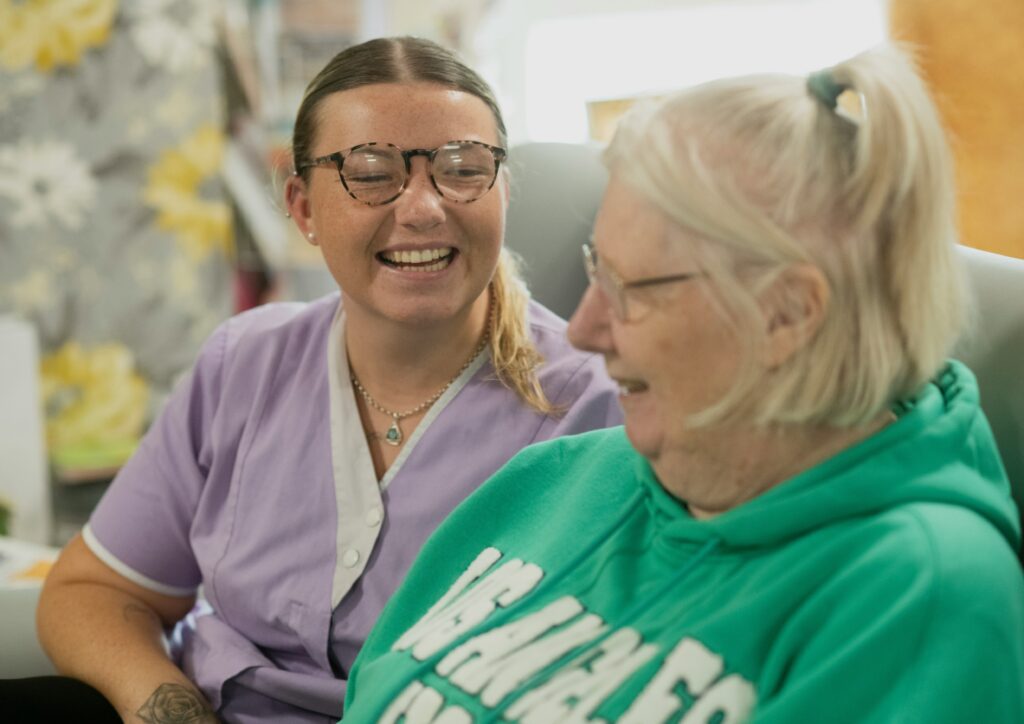
What makes a social care service truly sustainable? Is it the quality of support provided to older adults? The working conditions of everyone whose work makes that service possible, from care workers on the ground to the supply chains the service relies on? Its environmental impact across the full life cycle of the service? Or its economic viability?
The answer involves all these dimensions. As European societies face the challenges of population ageing, increasing demand for care services and workforce shortages, understanding the sustainability of social care has become increasingly important.
Within the Horizon Europe-funded SONYA project, researchers from Universitat Jaume I (UJI) are developing a comprehensive Sustainability Assessment Framework (SAF) to evaluate the environmental, social and economic impacts of care services provided by Social Economy Organisations (SEOs), alongside their effectiveness for older people.
The framework aims to provide a scientific basis for understanding how care services perform, identifying opportunities for improvement and supporting more informed decisions about the future of community-based care.
Why do we need to assess the sustainability of social care?
Social Economy Organisations, including cooperatives, associations, foundations and social enterprises, play an important role in providing care services and promoting social inclusion, particularly in rural communities.
However, evaluating their contribution is not straightforward. Traditional assessments may focus on service costs, the number of beneficiaries or the activities delivered, without fully capturing the wider impacts of care provision.
For example, a community-based care initiative may improve older adults’ access to support while long distances between rural settlements. Another initiative may deliver genuine social benefits for care workers while relying on goods manufactured under conditions that violate human rights. A third may outsource cleaning, catering and transport, so that a large share of the working hours behind every month of care sits in sectors with documented risks of low pay, precarious contracts and excessive working time
These interconnected effects, which arise at different stages of the service life cycle, highlight the importance of assessing care services from a broader perspective.
SONYA’s approach recognises that sustainable care must consider not only the people receiving support, but also the workers, organisations, communities and resources involved in providing it.
Introducing SONYA’s Sustainability Assessment Framework
Developed within Work Package 4, SONYA’s Sustainability Assessment Framework builds on scientific methodologies previously applied in the European SMART and ToNoWaste projects, adapting them to the specific characteristics of social care services.
The framework follows a Life Cycle Thinking approach, which considers the impacts generated throughout the different stages involved in delivering a service, rather than focusing exclusively on its immediate outcomes.
It combines four principal Key Performance Indicators (KPIs):
1. Environmental Footprint
This indicator evaluates the environmental impacts associated with providing a care service, using the European Commission’s Environmental Footprint methodology (EF 3.1).
It considers different environmental impact categories, including climate change, resource consumption, water use and other environmental pressures.
By examining these impacts across the service life cycle, the assessment can help identify areas where environmental performance could be improved.
2. Social Footprint
The Social Footprint examines the potential social and socio-economic impacts associated with care services and the stakeholders involved in their delivery, including workers further up the supply chains on which the service depends.
Using Social Life Cycle Assessment (S-LCA), supported by the PSILCA database, the framework considers issues such as working conditions, employment relationships, health and safety, equal opportunities and impacts on local communities.
This dimension is particularly relevant to SONYA’s objectives, which include promoting decent working conditions, inclusive employment and stronger community-based care systems.
3. Life Cycle Cost (LCC)
Economic sustainability is another essential component of care provision.
Through Life Cycle Costing, SONYA aims to assess the costs associated with delivering a service across its life cycle, rather than considering only its initial expenditure.
This approach can help organisations better understand the resources required to sustain their activities and compare the economic implications of different care solutions.
4. Effectiveness
Beyond sustainability, SONYA also considers whether care services achieve their intended objectives for the people receiving them.
The framework therefore includes an effectiveness indicator based on user satisfaction, using the CASP index, which addresses dimensions of quality of life relevant to older adults.
This fourth KPI complements the environmental, social and economic assessments by incorporating the perspective of care recipients into the evaluation.
Together, these four indicators provide a multidimensional basis for examining care services and identifying potential improvements.
From indicators to informed decision-making
SONYA’s framework is structured around three main steps.
The first, Sustainability Framework Analysis, focuses on understanding the care initiative being assessed. This involves defining its objectives, geographical context, stakeholders, resources and the boundaries of the assessment.
The second, Sustainability Assessment, applies the selected scientific methodologies to evaluate environmental, social and economic impacts. It also identifies sustainability hotspots: aspects of the service where significant impacts occur and where improvements could be prioritised.
The framework incorporates multi-criteria decision-making methods to support comparisons between care solutions and their potential improvements, taking into account the different sustainability dimensions.
Finally, the Reporting step aims to present the assessment results in an accessible and meaningful format, enabling organisations and other stakeholders to use the information in their decision-making processes.
Three additional processes support the framework throughout its application: assurance, to strengthen the reliability of the information; traceability, to improve transparency; and continuous improvement, to support the ongoing development of more sustainable care solutions.
Testing the framework in SONYA’s Living Labs
An important next step is the application and validation of the Sustainability Assessment Framework within SONYA’s three Living Labs in Italy, Bulgaria and Spain.
These Living Labs represent different rural care environments, with distinct organisational structures, resources and social economy development contexts.
Working alongside the local partners, the research team will use the pilot activities to test the framework, examine the feasibility of collecting the required information and assess how the indicators can be applied to real care services.
The process will also support the refinement of the assessment methodology, taking into account the needs and capacities of participating organisations.
This is particularly important for smaller Social Economy Organisations, which may have limited resources for collecting and analysing sustainability data. By combining information provided by the organisations with specialised databases, SONYA seeks to reduce the data-collection burden while maintaining a scientifically grounded assessment.
The insights gained through the Living Labs will contribute to the further development of the assessment model, including the integration of sustainability indicators into a multi-criteria evaluation approach.
Towards more sustainable and inclusive care systems
Measuring the sustainability of social care involves more than assessing costs or counting the number of people supported. It requires understanding how services affect the environment, the people and communities that lie behind the provision of care in the broadest sense, and the older adults who rely on them.
Through its Sustainability Assessment Framework, SONYA is working towards a more comprehensive and evidence-based approach to evaluating care services.
By bringing together environmental, social, economic and effectiveness indicators, the project aims to equip Social Economy Organisations and decision-makers with the knowledge needed to identify promising practices, improve existing services and contribute to more sustainable, inclusive and resilient care systems.
The framework represents an important step towards understanding not only what care services deliver, but also how sustainably they deliver it.